What Temperature Should a Sauna Be? Ideal Settings by Type
The ideal sauna temperature for infrared, traditional Finnish, and steam — plus how to set it, how humidity changes the feel, and beginner vs experienced settings.
There Is No Single "Right" Temperature
The ideal sauna temperature depends entirely on the type of sauna you're using. Each style heats your body differently, so a number that feels intense in one setting can feel mild in another. The goal is a temperature that keeps you comfortably warm and sweating without pushing you past your tolerance.
Ideal Temperature by Sauna Type
Use these typical ranges as a starting point rather than fixed rules. Drier air feels cooler at the same temperature, while added humidity makes any setting feel hotter.
- Infrared: roughly 120-150F. Infrared heats your body directly, so lower air temperatures still produce a deep sweat.
- Traditional Finnish: roughly 150-195F. The hot, dry air does the work, and many users add water to the stones for short humidity bursts.
- Steam room: roughly 110-120F at nearly 100 percent humidity, which feels far hotter than the thermometer suggests.
How to Set and Adjust the Heat
Preheat the cabin before your session so the temperature is stable when you step in. Start near the low end of the range and nudge it upward over several sessions as you learn what feels sustainable. With a traditional unit, ladling water onto the rocks is the main way to fine-tune perceived heat in the moment.
Beginner vs Experienced Settings
If you're new, begin at the cooler end and prioritize a relaxed, manageable session over chasing a high number. Experienced users often prefer the upper range, but more heat is not automatically better. For more on easing in, see our infrared sauna beginner guide.
- Beginners: start low, keep sessions short, and step out if you feel unwell.
- Experienced users: higher settings are fine, but comfort and hydration still come first.
Humidity Changes Everything
Perceived heat is driven by both temperature and humidity. A dry 180F traditional sauna can feel similar to a humid 115F steam room because moist air slows the evaporation of sweat that normally cools you. This is why steam rooms run at much lower air temperatures than dry saunas yet still feel demanding.
Comfort and Safety First
The best temperature is one you can tolerate calmly for your planned session length. Stay hydrated, avoid alcohol beforehand, and exit if you feel dizzy or nauseated. For a fuller checklist, read our sauna safety tips.
- Listen to your body: lightheadedness is a signal to cool down, not push through.
- Check with a clinician: if you're pregnant or have heart or blood-pressure conditions.
Top-Rated Saunas
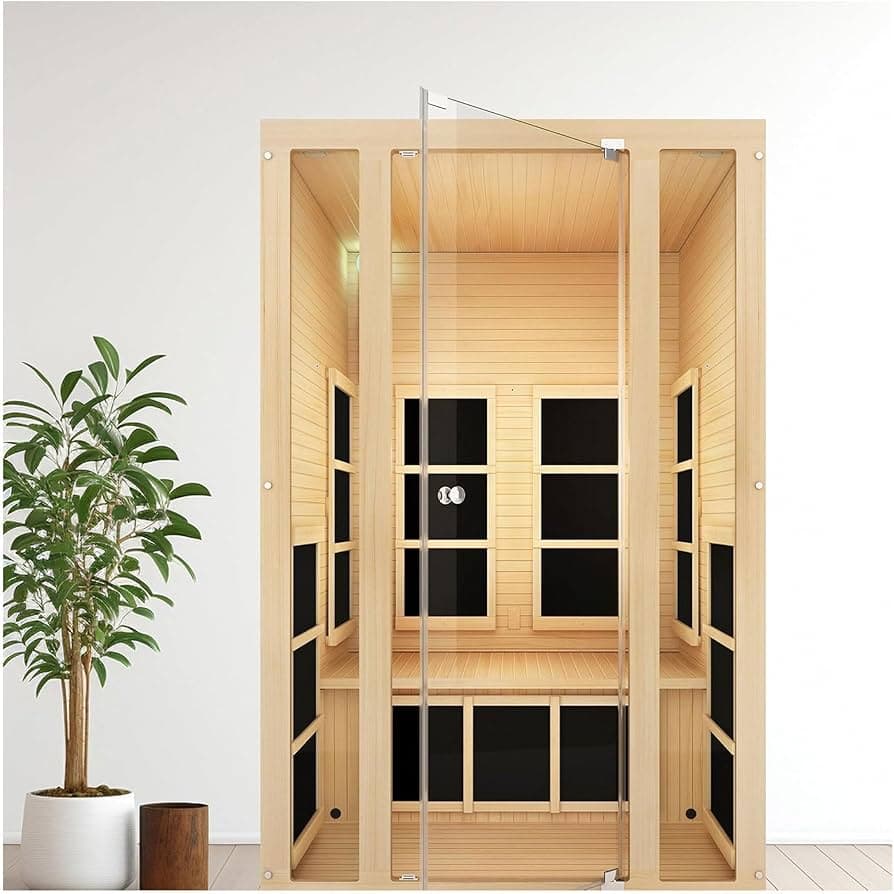
JNH Lifestyles Joyous 2 Person
A best-selling 2-person far-infrared sauna with 7 carbon-fiber heaters in a Canadian Hemlock cabin.
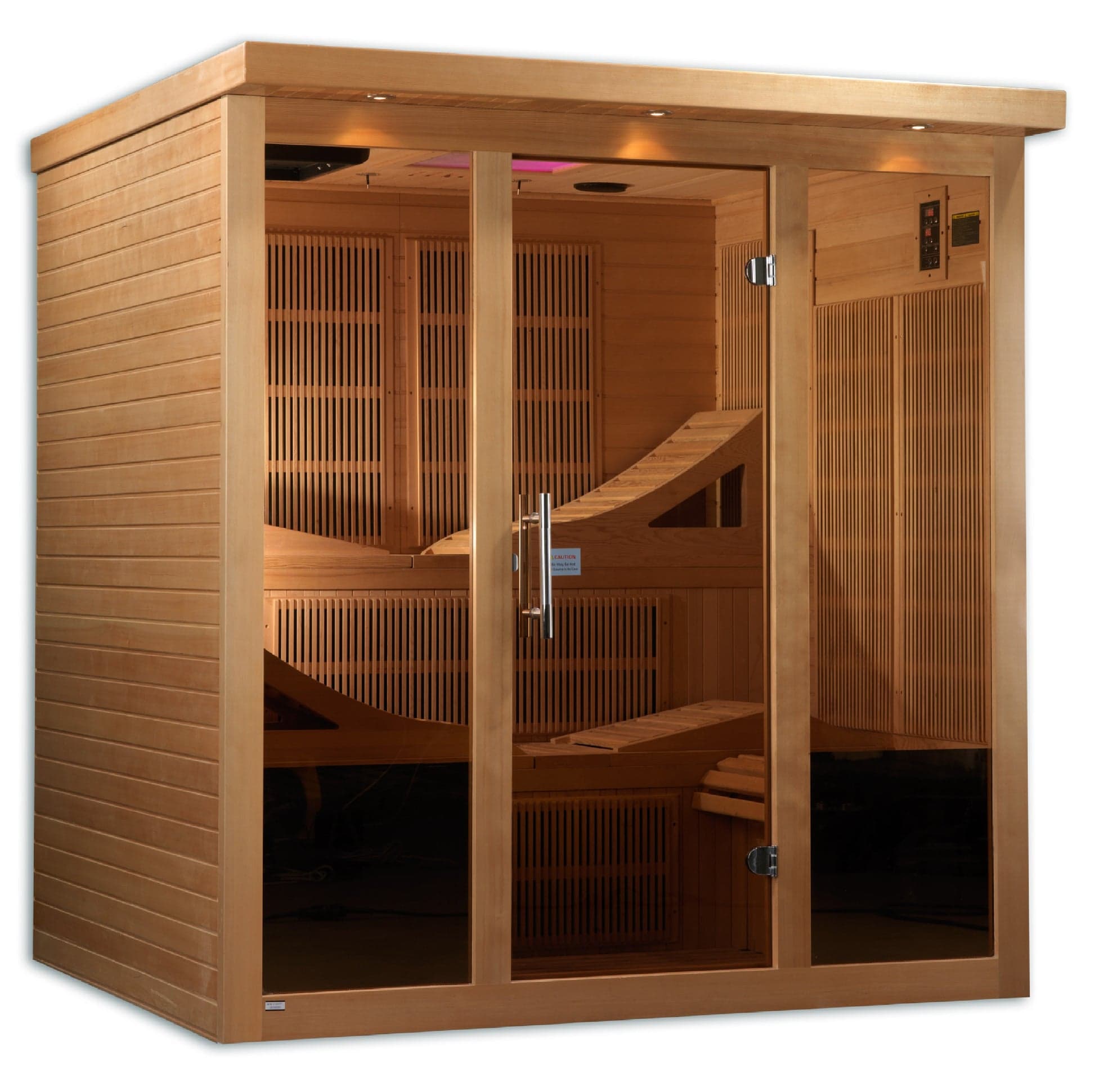
Golden Designs Monaco 6 Person
Spacious 6-person ultra-low-EMF far-infrared sauna in double-paneled Canadian Hemlock.