Far Infrared vs Near Infrared: What's the Difference?
Near, mid, and far infrared explained — how each wavelength works, what full-spectrum really means, and whether it's worth paying for.
The Three Infrared Wavelengths
Infrared light splits into three bands, each penetrating the body differently:
- Near infrared (NIR): the shortest wavelength, absorbed at the skin's surface and just below. Associated in marketing with skin and cellular benefits.
- Mid infrared (MIR): penetrates a bit deeper; associated with circulation and warming soft tissue.
- Far infrared (FIR): the longest wavelength and the workhorse of most infrared saunas — it produces the deep, comfortable heat and heavy sweat people associate with infrared.
What "Full Spectrum" Means
A full-spectrum sauna delivers all three bands (near + mid + far). Far-infrared-only saunas — which include most budget and many mid-range models — deliver just the FIR band. Both produce a genuine sauna experience; full spectrum simply adds the near and mid wavelengths.
Is Full Spectrum Worth Paying For?
It depends on what you want. If you specifically value near-infrared's claimed skin and cellular effects, full spectrum justifies its premium. If you mainly want deep, relaxing heat and a good sweat, a quality far-infrared sauna delivers the large majority of the experience for far less money.
Be a little skeptical of strong wavelength-specific health claims — evidence quality varies, and phrasing in the industry often outruns the research.
How to Choose
Budget-focused or first-time buyer? Far infrared is excellent value — see our best infrared saunas under $2,000. Want the most complete experience and willing to pay for it? Browse the best full-spectrum infrared saunas.
Top-Rated Saunas

JNH Lifestyles Joyous 2 Person
A best-selling 2-person far-infrared sauna with 7 carbon-fiber heaters in a Canadian Hemlock cabin.
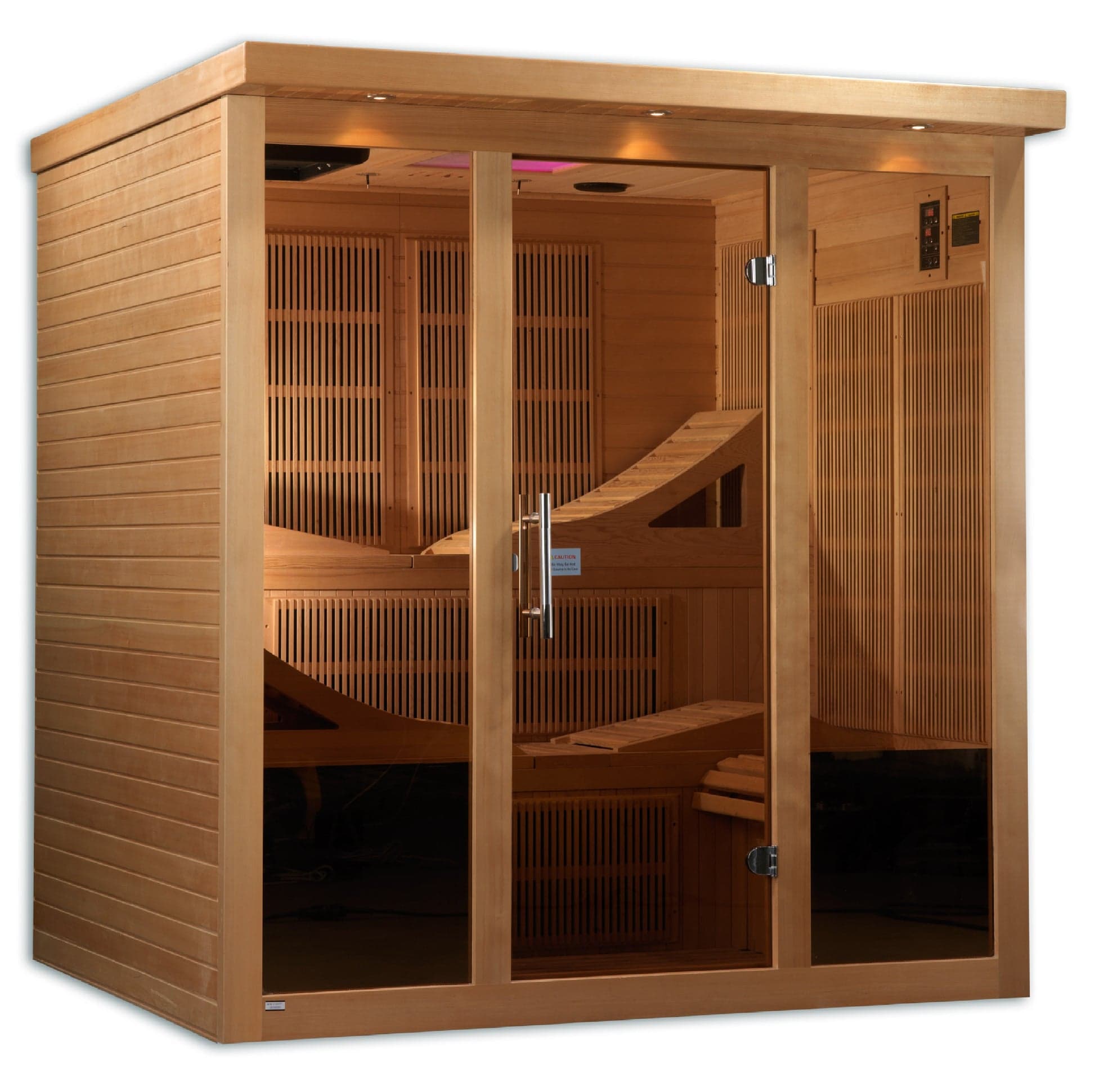
Golden Designs Monaco 6 Person
Spacious 6-person ultra-low-EMF far-infrared sauna in double-paneled Canadian Hemlock.